

Pioneering Project Transforms from Concept to Effective Horticultural Instrument, Promising a Greener Future for Farming
Main Facts: WEEDINATOR’s Decade-Long Journey Culminates in Horticultural Breakthrough
In a significant triumph for the do-it-yourself (DIY) and open-source hardware communities, the WEEDINATOR agricultural robot, a project that has captivated the attention of innovators on Hackaday for nearly a decade, has achieved a critical milestone: it is now a demonstrably effective horticultural instrument. This remarkable journey, chronicled since its initial feature in 2017, showcases an inspiring blend of persistent engineering, strategic adaptation, and the relentless pursuit of an autonomous solution to one of agriculture’s most enduring challenges: weed management.
The WEEDINATOR’s evolution represents a profound shift from its initial conceptualization as a flame-weeding robot to its current incarnation as a sophisticated mechanical cultivator. Leveraging modern computer vision, artificial intelligence, and precision robotics integrated with a commercial tractor base, the project stands as a testament to the power of iterative development and community-driven innovation. Its success in precisely identifying and physically removing unwanted plants heralds a future where farming practices can be more sustainable, less reliant on chemical herbicides, and significantly more efficient. Beyond its technical prowess, the WEEDINATOR team has even imbued their creation with a unique identity, complete with a distinctive theme song, further cementing its legendary status within the Hackaday ecosystem. This breakthrough not only offers a practical solution for farmers but also inspires a new generation of engineers and agriculturalists to tackle complex real-world problems with ingenuity and dedication.
A Chronology of Innovation: The WEEDINATOR’s Evolution
The story of the WEEDINATOR is one of enduring commitment, marked by strategic pivots and continuous technological refinement. Its nearly decade-long development cycle offers a compelling case study in the realities of bringing complex robotic systems from concept to field-ready functionality.
The Genesis: Hackaday Prize 2017 and the Flame Weeder Concept
The WEEDINATOR first emerged onto the public stage in 2017, making a notable appearance as an entry in the prestigious Hackaday Prize. This competition, renowned for fostering groundbreaking hardware projects, provided the initial platform and impetus for the team to present their ambitious vision. At its inception, the project envisioned an autonomous agricultural robot primarily focused on weed control through thermal means – specifically, a flame weeder. The concept was straightforward yet revolutionary: deploy a robotic platform capable of navigating farm fields, identifying weeds, and eradicating them with precisely directed bursts of flame, thereby reducing reliance on chemical herbicides.
This early iteration reflected a burgeoning interest in sustainable farming practices and the potential of robotics to address labor shortages and environmental concerns. The idea of using thermal energy for weed control, while not entirely new, presented unique challenges in terms of precision, safety, and efficiency when applied autonomously. The 2017 entry showcased the fundamental principles of navigation and target identification, laying the groundwork for the extensive development that would follow. The sheer scale of the agricultural environment, coupled with the variability of plant life and terrain, meant that even the most promising early designs would require years of dedicated refinement.
Strategic Pivots: Narrowing Scope and Adopting a Commercial Base
As development progressed, the WEEDINATOR team faced the inevitable realities of practical engineering. Building a robust, field-ready platform from scratch proved to be an immense undertaking. This led to a crucial strategic pivot: the adoption of a commercial tractor as the base platform. Specifically, the team selected an Iseki 321, a decision arrived at after careful evaluation of several competitors. The Iseki 321 stood out primarily due to its hydrostatic drive system, which proved uniquely capable of handling the very low, precise speeds desired for autonomous weeding operations. This choice significantly narrowed the project’s scope, allowing the team to focus their invaluable resources on the core challenges of weed detection and removal rather than the complexities of designing a custom robotic chassis from the ground up.
Concurrently, another significant shift occurred in the method of weed eradication. The original flame weeder concept, while innovative, presented certain practical limitations, including safety considerations, fuel consumption, and potential impact on soil microbiology. The team transitioned to a mechanical cultivation approach, opting for a claw-type system. This decision was driven by the desire for a more direct, physically effective, and environmentally friendly method of weed removal. The move towards mechanical cultivation represented a pragmatic evolution, demonstrating the team’s willingness to adapt their vision based on real-world engineering constraints and agricultural effectiveness.
Technological Maturation: Vision, Robotics, and Precision
The past few years have seen the WEEDINATOR undergo a profound technological maturation, integrating cutting-edge components to achieve its current level of precision and efficacy. At the heart of its intelligence lies a sophisticated computer vision system, leveraging a combination of OpenCV and YOLO26n. These powerful tools, running on a compact yet capable Jetson Nano board, enable the robot to accurately differentiate between crops and weeds in real-time, even in complex and dynamic field conditions. YOLO26n, a state-of-the-art object detection algorithm, provides the speed and accuracy necessary for rapid decision-making as the robot traverses the field.
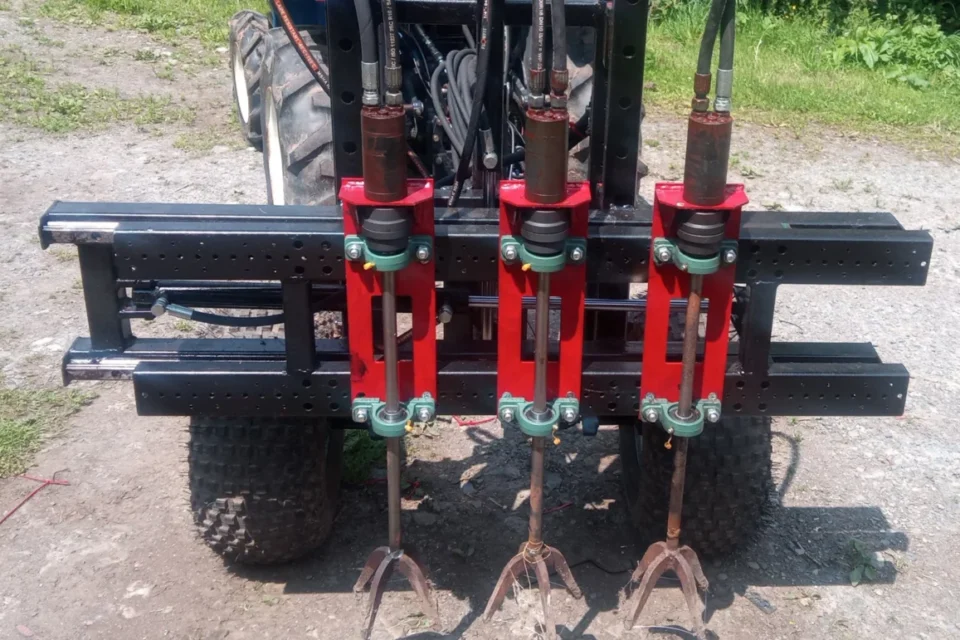
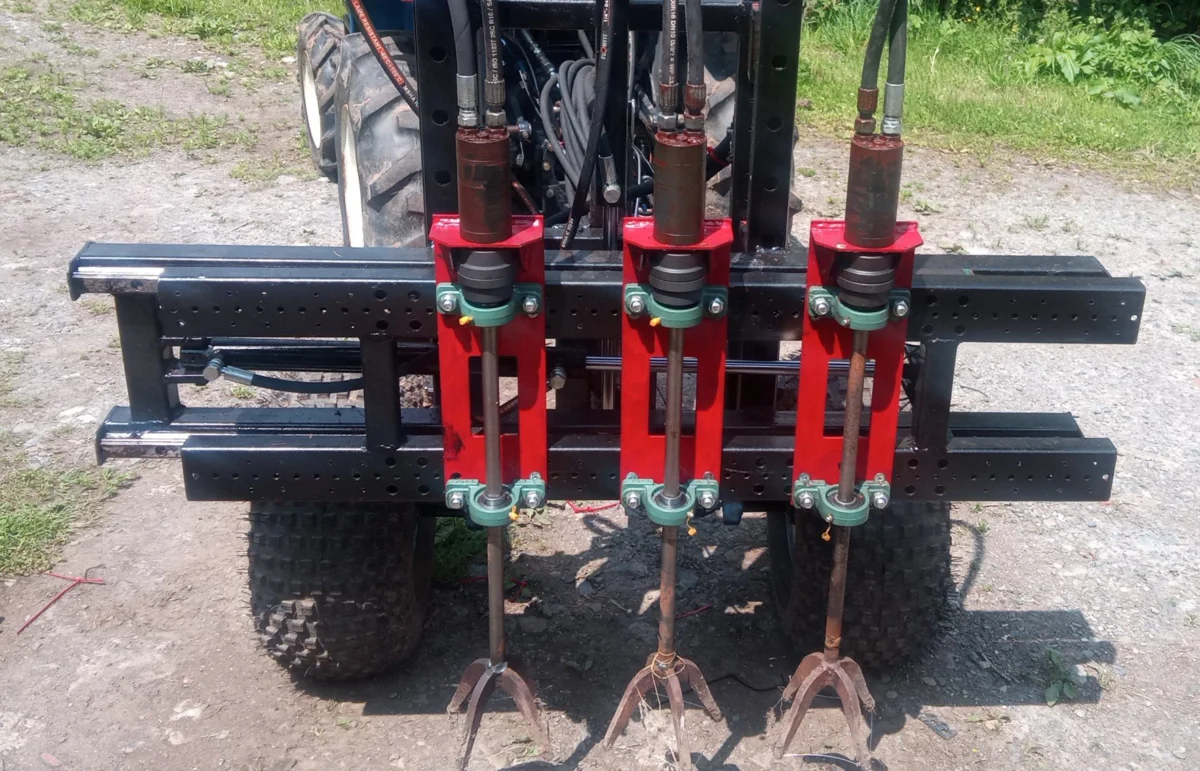
The robotics half of the equation is expertly managed by an STM32 Nucleo microcontroller. This embedded system acts as the central nervous system, translating the vision system’s commands into precise mechanical actions. The cultivators themselves are a marvel of engineering: a claw-type mechanism powered by the tractor’s hydraulics, offering control in all three axes – X, Y, and Z. This multi-axis control is paramount for achieving the delicate balance of aggression required to tear out weeds effectively while avoiding damage to adjacent crops. The integration of robust hydraulics ensures the necessary force and responsiveness for continuous operation in varying soil densities and weed sizes. This synergistic combination of advanced vision, intelligent control, and powerful mechanical actuation is what distinguishes the WEEDINATOR as a truly effective horticultural instrument.
The 2026 Milestone: From Concept to Horticultural Efficacy
The year 2026 marks the culmination of nearly a decade of tireless effort, as the WEEDINATOR project officially reached its most significant milestone: proving itself as an effective horticultural instrument. This achievement signifies that the robot is no longer merely a prototype or a proof-of-concept; it is a functional machine capable of performing its intended task with a high degree of reliability and precision in a real-world agricultural setting.
The latest demo video, released by the team, provides compelling visual evidence of this efficacy. It showcases the WEEDINATOR autonomously navigating rows, accurately identifying weeds, and precisely engaging its hydraulic claw cultivators to remove them. The fluidity of its movements, the speed of its detection, and the cleanliness of its weeding operation are all indicative of a system that has undergone rigorous testing and optimization. This milestone is not just a technical victory; it represents a validation of the team’s long-term vision and a tangible step towards more sustainable and efficient agricultural practices. The WEEDINATOR has transitioned from a promising idea to a practical tool, ready to make a significant impact on how farmers manage their fields.
Supporting Data and Technical Deep Dive
The WEEDINATOR’s success is built upon a foundation of carefully selected and integrated technologies, each playing a crucial role in its overall performance and efficacy. Understanding these components provides insight into the complexity and ingenuity behind this agricultural robot.
The Brains Behind the Brawn: Computer Vision and AI
The ability to distinguish between a crop and a weed in a chaotic, natural environment is perhaps the most challenging aspect of autonomous weeding. The WEEDINATOR tackles this with a robust computer vision pipeline, powered by two key technologies: OpenCV and YOLO26n, orchestrated on an NVIDIA Jetson Nano board.
OpenCV (Open Source Computer Vision Library) serves as the foundational toolkit for image processing. It handles tasks such as image acquisition from cameras, pre-processing (like noise reduction or color correction), and various low-level vision algorithms. OpenCV’s extensive functionalities allow the team to manipulate and analyze visual data efficiently, preparing it for higher-level interpretation.
YOLO26n (You Only Look Once, version 26n) is a state-of-the-art, real-time object detection algorithm. Its "You Only Look Once" paradigm means it processes an entire image simultaneously to detect objects, rather than scanning different regions repeatedly. This makes it incredibly fast, a critical requirement for a robot moving through a field where decisions must be made in milliseconds. The "n" likely denotes a nano or lightweight version, optimized for performance on embedded systems like the Jetson Nano while maintaining high accuracy. YOLO26n has been trained on vast datasets of crops and weeds, allowing it to accurately identify and localize unwanted plants with remarkable precision. This differentiation is not trivial; weeds can mimic crops in early growth stages, and lighting conditions, shadows, and plant density can all present significant challenges.
The Jetson Nano is NVIDIA’s compact, powerful AI computer for edge devices. Its low power consumption and high processing capabilities (especially for parallel processing tasks like neural network inference) make it an ideal choice for the WEEDINATOR. It can execute complex AI models like YOLO26n directly in the field, without needing to send data to a cloud server for processing. This edge computing capability ensures minimal latency, crucial for real-time control of the mechanical cultivators. By leveraging these technologies, the WEEDINATOR can achieve a level of precision that far surpasses traditional broad-spectrum herbicide application or manual weeding, which is often labor-intensive, inconsistent, and prone to human error.
Mechanical Precision: The Iseki 321 and Hydraulic Claw System
The choice of the Iseki 321 tractor as the base platform was a strategic decision that capitalized on existing robust agricultural machinery. Its most critical feature for the WEEDINATOR project is its hydrostatic drive. Unlike conventional gear-driven transmissions, a hydrostatic drive uses hydraulic fluid to transmit power, allowing for infinitely variable speed control, particularly at very low speeds. This is paramount for precision agriculture, where the robot needs to move slowly and consistently to allow the vision system ample time to detect weeds and the mechanical system to react accurately. Maintaining a steady, ultra-low speed is essential for effective, targeted weeding, preventing missed weeds or accidental crop damage that could occur with jerky or inconsistent movement.
The three-axis hydraulic claw system is the physical interface between the robot’s intelligence and the soil. Each claw is designed for robust operation and precise manipulation. Powered directly by the tractor’s hydraulics, these claws possess significant force, enabling them to penetrate compacted soil and extract stubborn weeds. The three-axis control (X, Y, and Z) allows for:
- X-axis (Lateral movement): To position the claw precisely over the detected weed, adjusting for minor deviations in the tractor’s path or weed location.
- Y-axis (Longitudinal movement): To follow the weed’s position as the tractor moves forward, ensuring the claw remains centered during the extraction process.
- Z-axis (Vertical movement/depth): To control the depth of penetration, ensuring the weed is extracted from its root without disturbing the surrounding crop roots or excessively tilling the soil.
The use of hydraulics for powering these claws offers several advantages over electric actuators, including higher power density, better shock resistance (critical for field operations), and robust performance in dirty and wet environments. The engineering challenge lies in controlling these powerful hydraulic actuators with the precision demanded by the vision system, a task coordinated by the STM32 Nucleo.
The Unsung Hero: The STM32 Nucleo for Robotics Control
While the Jetson Nano handles the "thinking" (vision and AI), the STM32 Nucleo board takes on the crucial role of the "doing" – translating the intelligent decisions into physical actions. The STM32 Nucleo is a development board based on STMicroelectronics’ STM32 microcontrollers, known for their versatility, real-time performance, and extensive peripheral sets.
In the WEEDINATOR, the STM32 Nucleo acts as the real-time controller for the robotic arm and claw system. It receives commands from the Jetson Nano (e.g., "move claw to X, Y, Z coordinates and actuate"). The Nucleo then manages the motors, valves, and sensors associated with the hydraulic claw system, ensuring precise and timely movements. This includes:
- Motor/Valve Control: Actuating hydraulic valves to control the flow of fluid to the claw’s cylinders, thereby managing its position and force.
- Feedback Loops: Reading sensor data (e.g., position encoders, pressure sensors) to verify that the claw is moving as commanded and making real-time adjustments.
- Safety Protocols: Implementing fail-safes and emergency stops to protect both the equipment and surrounding environment.
The Nucleo’s ability to execute code with deterministic timing is essential for the precise, synchronized movements required for effective weeding. It bridges the gap between the high-level intelligence of the AI and the low-level physical control of the machinery, making the WEEDINATOR a cohesive and functional robotic system.
The Human Element: Persistence and Passion
Beyond the impressive technological stack, the WEEDINATOR project embodies the profound impact of human persistence and passion. The phrase "nearly a decade of work on-and-off" understates the immense dedication required to sustain such a complex and long-term endeavor. Many projects, even promising ones, falter or are abandoned when faced with engineering hurdles, funding challenges, or simply the passage of time. The WEEDINATOR team, however, has consistently pushed through these obstacles, driven by a clear vision and an unwavering commitment to their goal.
This enduring spirit is perhaps best symbolized by their unique decision to create a theme song for the project. While seemingly a whimsical touch, it speaks volumes about the team’s enthusiasm, creativity, and pride in their work. It transforms the WEEDINATOR from a mere collection of circuits and hydraulics into a project with a distinct personality and a memorable identity. This level of engagement not only makes the project more appealing to the broader community but also serves as a constant source of motivation for the developers themselves. It’s a testament to the idea that innovation doesn’t always have to be a grim, solitary pursuit but can be infused with joy and collaborative spirit.
Official Responses and Community Engagement
While the WEEDINATOR project does not have "official responses" in the traditional corporate or governmental sense, its journey is deeply intertwined with the vibrant ecosystem of the Hackaday community and the broader open-source hardware movement. The project’s longevity and recent success resonate powerfully within these circles.
Hackaday’s Endorsement and Community Recognition
Hackaday, as the primary platform showcasing the WEEDINATOR, has played a crucial role in its recognition and sustained development. Featuring the project multiple times over the years, including its initial highlight in the 2017 Hackaday Prize, signifies a consistent endorsement of its ambition and progress. Hackaday’s editorial team has explicitly called out the WEEDINATOR as one of its "longer-running submissions" and praised the team for their unique approach, particularly the creation of a theme song.
This recognition within the Hackaday community is invaluable. It provides visibility, attracts potential collaborators, offers opportunities for feedback, and, perhaps most importantly, provides moral support to the developers. The comments sections and project logs on Hackaday.io serve as a testament to the community’s engagement, offering constructive criticism, encouragement, and shared excitement for each new milestone. This form of "official response" from a respected platform and its engaged readership is a powerful motivator for open-source projects. It validates the effort and inspires other makers and engineers to embark on their own challenging ventures, demonstrating that persistence can indeed lead to tangible breakthroughs.
The Power of Open-Source Hardware and Collaboration
The WEEDINATOR project is a shining example of the principles underlying the open-source hardware movement. By sharing their progress, technical details, and challenges on a public platform, the team has not only documented their journey but also contributed to a collective body of knowledge. This open approach fosters a collaborative environment where ideas can be freely exchanged, and solutions can be crowdsourced or inspired by the work of others.
The iterative nature of the WEEDINATOR’s development, with its strategic pivots and technological upgrades, perfectly illustrates how open-source projects benefit from continuous learning and adaptation. Failures are viewed not as endpoints but as opportunities for refinement. The community’s collective intelligence often helps in identifying overlooked issues or suggesting alternative approaches. While the project may not be strictly open-source in every component (e.g., commercial tractor base), its development ethos on Hackaday embodies the spirit of shared innovation, demonstrating how a distributed network of enthusiasts can drive complex technological progress that might otherwise be confined to well-funded corporate R&D labs.
Public Reception and Future Collaborations (Hypothetical/Speculative)
The WEEDINATOR’s recent achievement of becoming an "effective horticultural instrument" is likely to generate significant interest beyond the immediate Hackaday community. Agricultural technology companies, often seeking innovative solutions for precision farming, might view this project as a compelling proof-of-concept. Its blend of off-the-shelf components (Iseki tractor, Jetson Nano) with custom integration and AI offers a potentially scalable and cost-effective model for autonomous weeding.
There is a strong possibility of future collaborations with commercial entities, potentially leading to further development, field testing on a larger scale, or even commercialization. The project’s open documentation could also attract academic researchers interested in agricultural robotics, computer vision in natural environments, or human-robot interaction in farming. Furthermore, its compelling narrative of perseverance could inspire educational institutions to incorporate such projects into their curricula, fostering practical engineering skills and an understanding of sustainable agriculture among students. The WEEDINATOR’s success thus extends beyond its immediate technical achievement, positioning it as a catalyst for broader innovation and dialogue within the agricultural sector.
Implications for Modern Agriculture and Sustainability
The WEEDINATOR’s journey and its current efficacy carry profound implications for the future of modern agriculture, particularly in the critical areas of sustainability, efficiency, and labor.
Reducing Herbicide Dependence and Environmental Impact
One of the most significant implications of autonomous mechanical weeding is the potential to drastically reduce, if not eliminate, the need for chemical herbicides. Traditional farming practices often rely heavily on herbicides to manage weeds, which can have several negative environmental consequences:
- Soil Health: Herbicides can negatively impact soil microbiology, reducing beneficial organisms and long-term soil fertility.
- Water Quality: Runoff from herbicide-treated fields can contaminate groundwater and surface water, harming aquatic ecosystems and potentially affecting human health.
- Biodiversity: Non-selective herbicides can harm non-target plants and reduce biodiversity in agricultural landscapes.
- Herbicide Resistance: Continuous use of the same herbicides leads to the evolution of herbicide-resistant weeds, creating a vicious cycle of developing new, stronger chemicals.
By offering a precise, mechanical alternative, the WEEDINATOR supports organic farming and other sustainable agricultural practices. It allows farmers to maintain weed-free fields without introducing synthetic chemicals, preserving soil health, protecting water resources, and fostering a more biodiverse ecosystem. This shift aligns perfectly with growing consumer demand for organically grown produce and increasing regulatory pressures to minimize environmental footprints in agriculture.
Addressing Labor Shortages and Increasing Efficiency
Agriculture worldwide faces persistent challenges with labor shortages, particularly for tasks like weeding, which are often manual, repetitive, and arduous. The WEEDINATOR presents a viable solution to this problem by automating a significant portion of the weeding process. Autonomous robots can operate continuously, potentially 24/7, without fatigue, thereby increasing the overall efficiency and consistency of farm operations.
This increased efficiency translates into several economic benefits for farmers:
- Reduced Labor Costs: Significant savings on wages and associated labor management expenses.
- Improved Crop Yields: More consistent and timely weed removal leads to less competition for resources, resulting in healthier crops and higher yields.
- Operational Flexibility: Robots can operate in conditions that might be unsuitable or unsafe for human workers, extending the operational window.
- Precision and Consistency: Robotic systems maintain a consistent level of precision that is difficult to achieve with manual labor, especially over large areas.
By providing a reliable, autonomous workforce for weeding, the WEEDINATOR contributes to making farming more economically sustainable and resilient against fluctuating labor markets.
The Future of Autonomous Farming: A Glimpse into Tomorrow
The WEEDINATOR is not an isolated phenomenon but rather a prominent example within the broader trend of precision agriculture and autonomous farm machinery. As highlighted by the original article, other innovative solutions exist, ranging from robots using concentrated sunlight to incinerate weeds to drones applying precision herbicides. Each approach offers unique advantages and challenges, but they all point towards a future where farming is increasingly automated, data-driven, and optimized for resource efficiency.
The widespread adoption of technologies like the WEEDINATOR faces several challenges, including initial investment costs, the need for robust connectivity in rural areas, and the development of standardized protocols for interoperability between different farm robots. There are also ethical considerations, such as the potential impact on agricultural employment and ensuring that these advanced technologies are accessible to small and medium-sized farms, not just large corporate operations.
However, the opportunities are immense. Autonomous farming promises not only environmental benefits and increased efficiency but also a new era of data-driven decision-making, allowing farmers to optimize planting, fertilization, irrigation, and harvesting with unprecedented accuracy. The WEEDINATOR, with its decade-long development and ultimate success, provides a compelling narrative for this transformative shift, demonstrating that even complex robotic systems can be developed through persistence, community collaboration, and a clear vision.
Inspiring the Next Generation of Agricultural Innovators
Finally, and perhaps most importantly, the WEEDINATOR project serves as a powerful source of inspiration. For aspiring engineers, scientists, and farmers, it showcases what is possible when ingenuity meets perseverance. It demystifies complex technologies like AI and robotics, demonstrating their practical application in a vital industry. The project’s open-source ethos encourages a culture of learning, sharing, and collaborative problem-solving.
By demonstrating that a small team, driven by passion and leveraging accessible tools, can develop a sophisticated and effective agricultural robot, the WEEDINATOR encourages others to tackle similar challenges. It highlights the potential for DIY and open-source movements to contribute significantly to addressing global issues like food security and environmental sustainability. The WEEDINATOR is more than just a weed-pulling robot; it is a beacon for innovation, proving that the future of agriculture can be built on a foundation of smart technology, environmental responsibility, and human ingenuity.
